Why Early Intervention Matters: Giving Every Child the Best Start in Life
09 Jul 2026 · Dr Adarsh Reddy
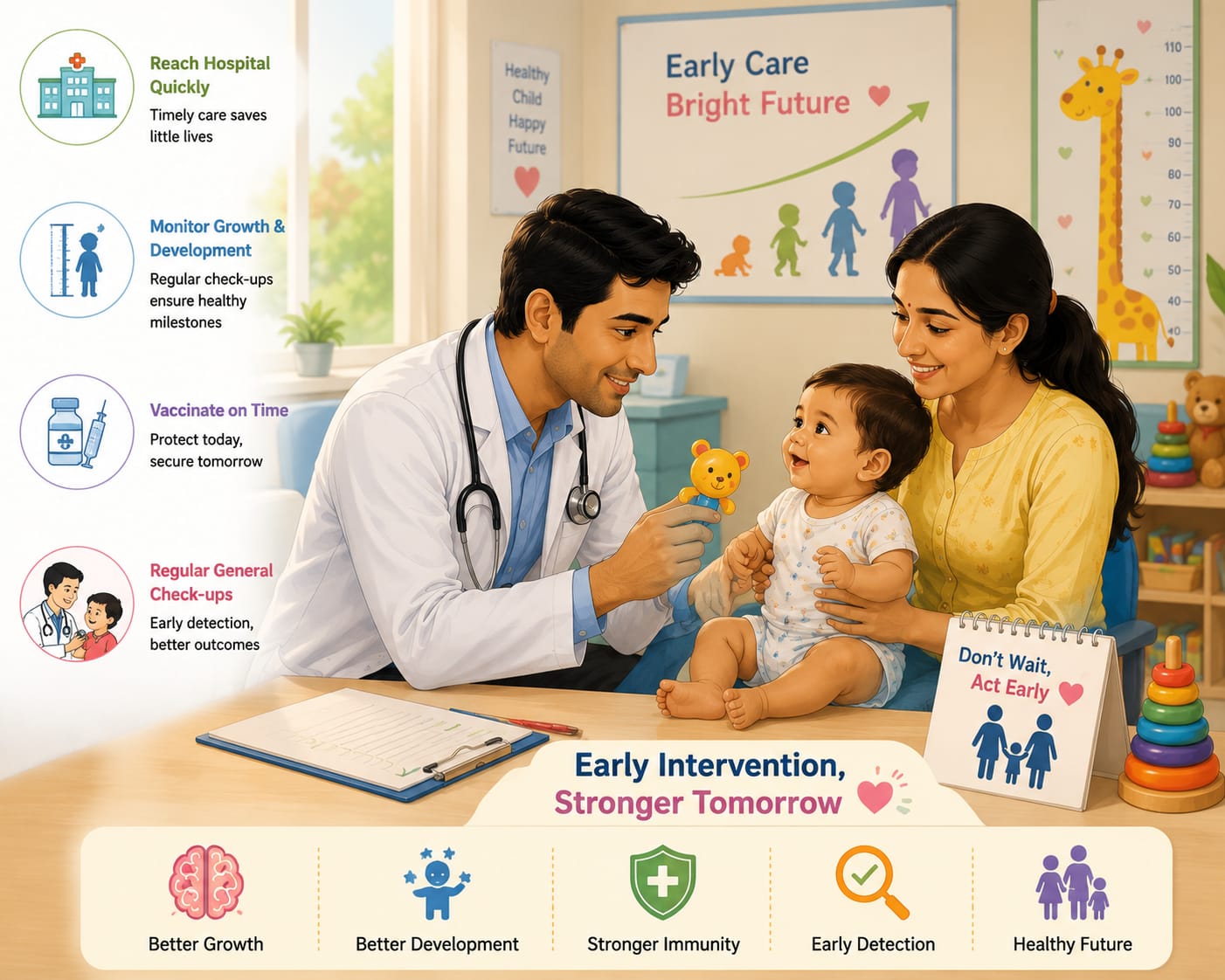
Every parent dreams of seeing their child grow into a healthy, happy, and confident individual. As a pediatrician, I have the privilege of caring for children from birth through adolescence, and one lesson has remained constant throughout my practice: the earlier we identify and address a child's health or developmental needs, the better the outcomes. Early intervention is not simply about treating illnessâit is about recognizing opportunities to support a child's growth, development, nutrition, and overall well-being during the most important years of life.
The First Five Years: A Golden Window
The first five years of life are the most crucial period of a child's development. During these years, the brain develops at an extraordinary pace, forming millions of connections that influence learning, behaviour, emotional health, and physical growth. Every smile, every spoken word, every step, and every interaction contributes to building a strong foundation for the future. When children receive proper nutrition, timely healthcare, complete immunization, and a nurturing environment during these early years, they are more likely to grow into healthy and confident adults. This is why pediatric care during infancy and early childhood is so importantâit allows us to identify concerns early and provide the right support when it matters the most.
Why Early Intervention Matters
Many parents understandably believe that children will eventually "catch up" if they are a little slower in reaching milestones. While every child develops at their own unique pace, there are established developmental milestones that help us assess whether a child is progressing appropriately. When delays or concerns are recognized early, there is often an excellent opportunity to intervene with guidance, therapy, or medical treatment. Early intervention can significantly improve a child's physical, cognitive, language, and social development, often preventing small concerns from becoming larger challenges later in life. Seeking help early should never be viewed as a cause for worry; rather, it is one of the most valuable investments parents can make in their child's future.
Monitoring Growth: More Than Just Height and Weight
Growth is much more than numbers on a weighing scale or measuring tape. Every time a child visits the pediatrician, their height, weight, and in younger children, head circumference are carefully assessed because these measurements provide valuable information about their overall health. Growth patterns can reveal nutritional deficiencies, hormonal disorders, chronic illnesses, genetic conditions, or other underlying medical problems even before symptoms become obvious. By plotting these measurements on standardized growth charts, we can detect concerns early and provide timely interventions that help children return to a healthy growth pattern. Regular growth monitoring gives both parents and doctors confidence that a child is progressing as expected.
Development: Every Milestone Has a Story
Children learn and develop continuously from the moment they are born. Rolling over, sitting, crawling, walking, speaking, playing, interacting with family members, and learning new skills are all important milestones that reflect healthy brain development. Occasionally, a child may experience delays in speech, movement, learning, behaviour, or social interaction. Identifying these delays at an early stage allows us to begin appropriate therapies and support services while the brain is still highly adaptable. Children who receive timely intervention often make remarkable progress and develop skills that may have been much harder to achieve if treatment had been delayed. Every milestone tells us something important about a child's development, making routine developmental assessments an essential part of pediatric care.
Nutrition: The Fuel for Healthy Growth
Nutrition forms the cornerstone of healthy childhood. A growing child's body and brain require adequate nutrients to develop properly, fight infections, and support learning. Breastfeeding during infancy, timely introduction of complementary foods, balanced family meals, and age-appropriate nutrition all contribute to healthy physical and mental development. Unfortunately, nutritional deficiencies can sometimes exist even in children who appear healthy. Iron deficiency, vitamin D deficiency, poor weight gain, or unhealthy weight gain can all affect growth, immunity, school performance, and future health. Regular pediatric check-ups help identify these concerns early and provide families with practical nutritional guidance suited to each stage of childhood.
Vaccination: Protection Before Disease
Vaccination is one of the greatest achievements in modern medicine and remains one of the safest and most effective ways to protect children from serious infectious diseases. Vaccines prepare a child's immune system to recognize and fight dangerous infections before exposure occurs. They not only protect individual children but also help safeguard the community by reducing the spread of preventable diseases. Following the recommended immunization schedule ensures that children receive protection when they need it most. Delaying or missing vaccines can leave children vulnerable to illnesses that are now largely preventable. Staying up to date with vaccinations is one of the simplest yet most powerful ways parents can protect their child's health.
The Importance of Regular Pediatric Check-ups
A pediatric visit is much more than a consultation for fever, cough, or illness. It is an opportunity to assess every aspect of a child's well-being, including growth, development, nutrition, vaccination status, hearing, vision, behaviour, and emotional health. These visits also provide parents with an opportunity to ask questions about feeding, sleep, toilet training, school readiness, behavioural concerns, or any other aspect of their child's health. Many conditions that affect children develop gradually and may not produce obvious symptoms in the beginning. Routine health check-ups allow these concerns to be identified early, when they are often easiest to manage.
A Partnership Between Parents and Pediatricians
As pediatricians, our responsibility extends far beyond treating illnesses. We work alongside parents to monitor healthy growth, encourage proper nutrition, promote preventive healthcare, and support every child's developmental journey. No concern is ever too small to discuss. Whether it is poor appetite, delayed speech, slow weight gain, behavioural changes, recurrent infections, or simply a question about your child's progress, seeking advice early can make a meaningful difference. Together, parents and pediatricians form a team with one common goalâto help every child reach their fullest potential.
A Message to Parents
Healthy childhood is built through prevention rather than treatment. Regular health check-ups, balanced nutrition, timely vaccinations, developmental monitoring, and a loving, supportive environment together create the strongest foundation for lifelong health. Early intervention is not about searching for problems; it is about recognizing opportunities to help children grow, learn, and thrive.
The decisions we make during a child's earliest years have a lasting impact on their future. By investing in their health today, we are investing in the adults they will become tomorrow. Every child deserves the opportunity to reach their full potential, and with early intervention, thoughtful guidance, and partnership between families and healthcare professionals, we can give every child the very best start in life.
Back to Blog